
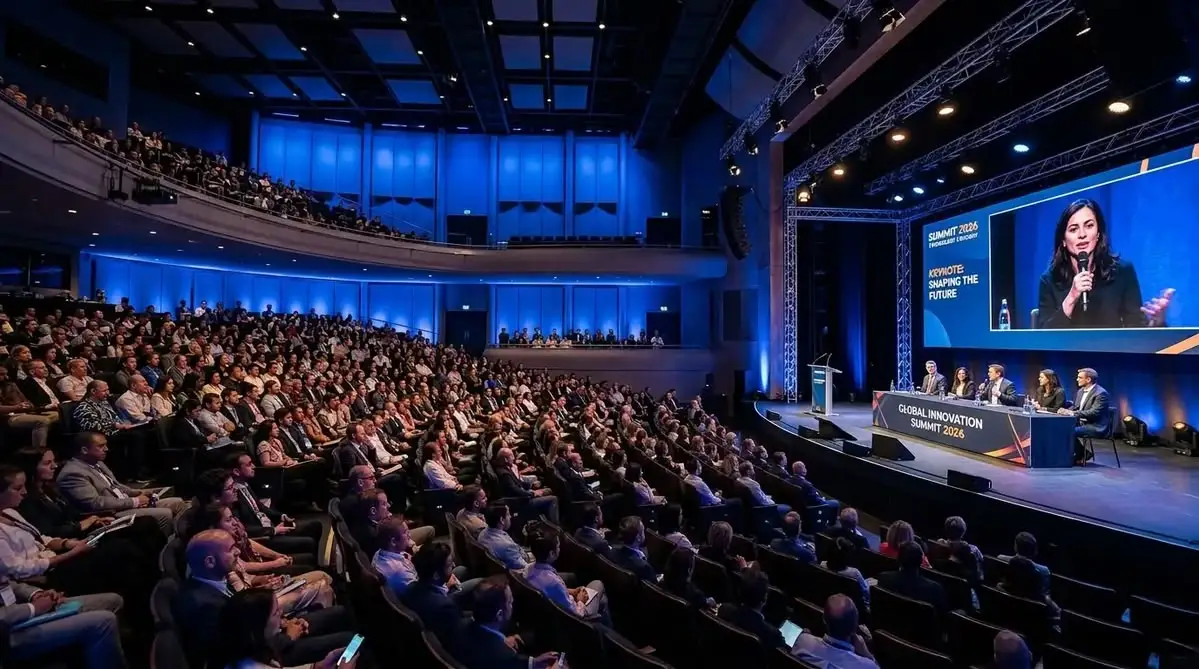
Most conference disasters are not dramatic. Nobody usually walks away from a Karachi corporate event describing a single catastrophic failure. Instead, a handful of small, avoidable problems quietly stack up until an event that should have felt polished instead feels slightly off, and everyone leaves sensing it without quite being able to name why.
A conference event planner in Karachi with real experience has usually seen every version of this pattern before, which is exactly why the good ones plan so deliberately around the same handful of recurring failure points.
Registration Bottlenecks Set the Tone Before Anything Starts
A slow check in line is one of the most common early failures, and it colors how attendees experience everything that follows. If registration cannot keep pace with arrivals, guests form a queue stretching into the lobby, sessions start late waiting for people to actually get seated, and the entire schedule shifts backward before the first speaker has said a word.
This usually comes down to understaffing relative to expected arrival patterns, not a fundamentally broken process. A planner who has run enough conferences knows roughly how many registrations staff a given attendee count requires and builds accordingly rather than guessing.
Audio Problems Are More Common Than People Expect
A microphone cutting in and out, a speaker who cannot be heard past the fifth row, and feedback screeching through the speakers mid-presentation—these are avoidable failures that happen surprisingly often because sound checks get skipped or rushed under time pressure before doors open.
Planners experienced in conference production in Karachi test every microphone individually rather than assuming a batch check covers it and build in enough buffer time before the event starts to actually catch a failing unit rather than discovering it live in front of an audience.
Speaker Coordination Failures Cascade Quickly
A schedule looks perfectly organized on paper until a keynote speaker runs fifteen minutes over, and suddenly every session behind it is compressed or delayed. Without a dedicated person managing speaker timing and cueing transitions, a single overrun can quietly unravel an entire afternoon's schedule.
Experienced planners assign this role explicitly rather than assuming it will handle itself, with someone specifically responsible for cueing speakers, signaling time remaining, and making real-time calls about compressing a session if the schedule starts slipping.
Production Failures Happen When Equipment Is Not Actually Tested
A projector that will not connect to a laptop. An LED screen displaying the wrong resolution. A presentation file that will not open on the venue's system. These failures almost always trace back to equipment that was set up but never actually tested with the real presentation files in advance.
A planner who insists on a full technical run through the day before, rather than assuming equipment will simply work once it arrives, catches most of these problems before they ever become visible to an audience.
Branding Gaps Make a Conference Feel Unfinished
Generic signage, an unbranded registration table, and a stage backdrop that does not match the rest of the event's visual identity—these gaps are rarely dramatic on their own, but together they make a conference feel assembled rather than deliberately designed. Attendees notice this even when they cannot articulate exactly what feels off.
Planners who treat branding as a core requirement rather than an optional add-on tend to avoid this problem entirely, ensuring registration areas, stages, and signage all reflect a consistent identity from the moment guests arrive.
Catering Timing Disrupts More Than People Realize
Food served too early interrupts arrivals and networking. Food served too late leaves guests distracted and restless during afternoon sessions. Catering that does not match the actual schedule of a conference, rather than following a generic timing template, is a subtle but common source of friction that affects how engaged an audience stays throughout the day.
What Actually Prevents These Problems
None of these failure points are exotic or difficult to solve individually. What actually prevents them is a planner who has seen the pattern enough times to build contingencies proactively, adequate registration staffing, individually tested microphones, dedicated speaker coordination, a full technical run-through, consistent branding, and catering timed to the actual schedule rather than a generic template.
A conference event planner in Karachi worth hiring will be able to speak to each of these specifically when asked, not as abstract best practices but as things they have actually managed and occasionally had to fix in real time during a past event.
The Real Lesson for Anyone Planning a Conference Next
The gap between a conference that feels effortless and one that quietly falls apart rarely comes down to budget. It comes down to whether someone anticipated these specific, recurring failure points and planned around them deliberately, rather than assuming a good venue and a solid speaker lineup would be enough to carry the day on their own.
A Practical Way to Test a Planner Before Hiring Them
Rather than asking a planner whether they have handled these problems before, which most will answer yes to regardless of actual experience, ask them to walk through exactly how they would prevent one specific failure, a registration bottleneck for your expected attendee count, for instance. Listen for a concrete staffing number and a specific process, not a general assurance that it always works out fine.
This single question tends to separate planners with genuine experience from those who are confident in general terms but have not actually thought through the specifics of your event yet.
Why Smaller Conferences Are Not Immune to These Problems
It is tempting to assume these failure points only matter at large-scale events with thousands of attendees. In practice, a fifty-person leadership conference can suffer from the exact same registration bottleneck or audio failure as a two thousand-person summit, simply at a smaller scale that feels just as disruptive to the people actually in the room.
The size of the failure scales with the event, but the underlying causes—understaffing, untested equipment, absent speaker coordination—remain identical regardless of how many chairs are in the hall. This is part of why the same vetting questions apply whether you are planning an intimate industry seminar or a large-scale corporate summit.
Building a Post-Event Habit Worth Keeping
One habit that consistently improves conference quality over time is a short debrief immediately after the event, while details are still fresh. Ask what went smoothly, what nearly went wrong, and what would be done differently next time. Planners who build this into their process, rather than treating each conference as an isolated project, tend to improve measurably from one event to the next.
This kind of continuous improvement is often what separates an experienced conference event planner in Karachi from one still learning through trial and error, sometimes at a client's expense rather than their own.